Spicy Moroccan Fish Recipe – Rich Sauce Delight
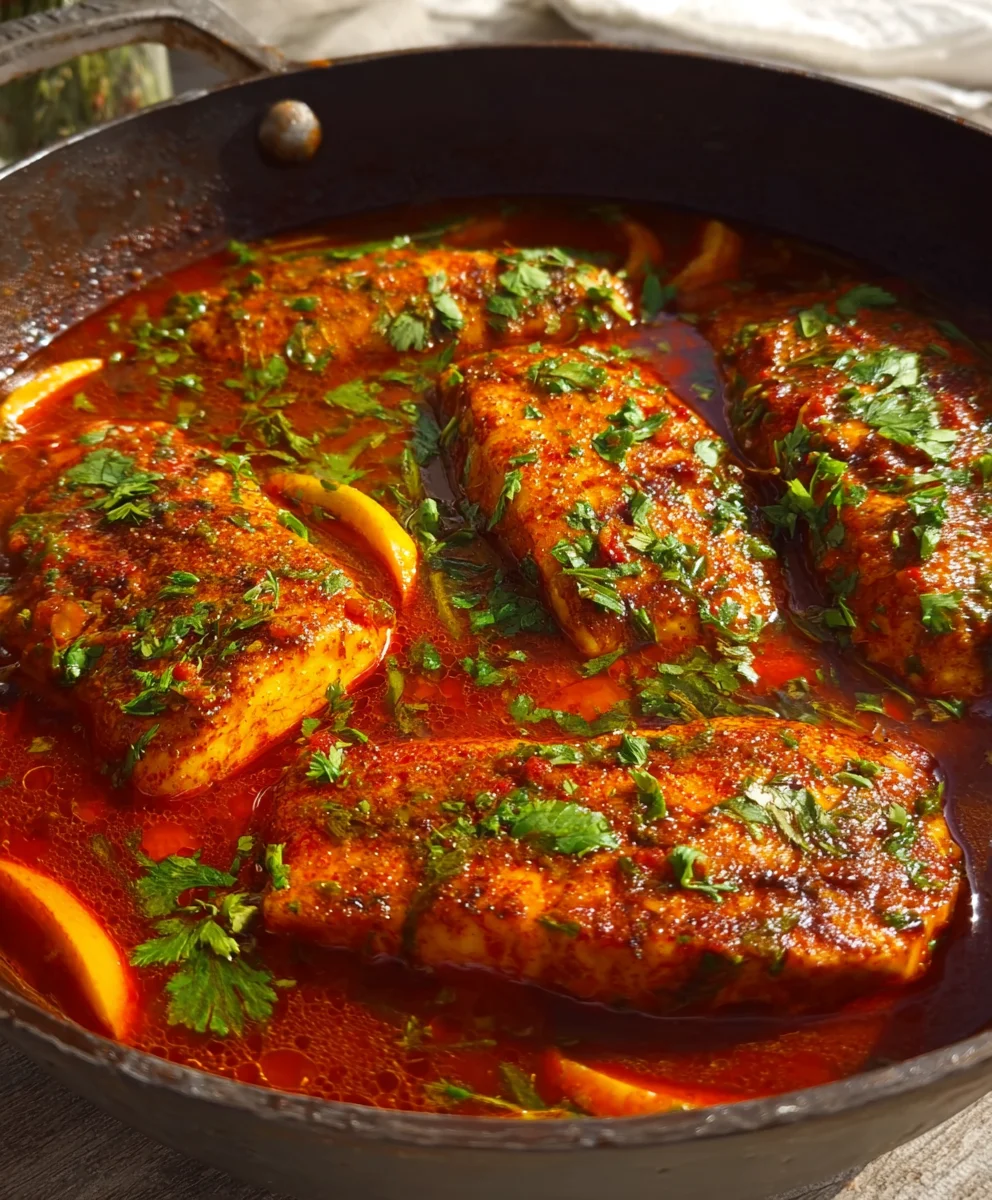
Classic Spicy Moroccan Fish in Rich Sauce is more than just a meal; it’s a vibrant journey for your taste buds, transporting you straight to the bustling souks and aromatic kitchens of North Africa. This beloved dish, celebrated for its depth of flavor and comforting warmth, has a way of captivating everyone who tries it. What makes this particular preparation of Classic Spicy Moroccan Fish in Rich Sauce so special? It’s the exquisite balance of tender, flaky fish swimming in a luxuriously spiced tomato and herb sauce, kissed with hints of preserved lemon and olives. It’s the kind of dish that feels both incredibly exotic and wonderfully familiar, perfect for a cozy family dinner or impressing guests with your culinary prowess. Prepare to be enchanted by its fragrant spices and satisfyingly rich texture.
Ingredients:
- 1 pound (450g) salmon fillets, skin on or off as you prefer. You can substitute with cod, halibut, or even shrimp for a different texture.
- ⅓ cup olive oil, a good quality extra virgin extract will add a lovely depth of flavor.
- 1 red bell pepper, seeded and sliced into thin strips. This adds sweetness and a beautiful color.
- 1 serrano pepper, or 2 jalapeno peppers, seeded and sliced into thin strips. The amount can be adjusted based on your heat preference. If you’re sensitive to spice, removing the seeds and membranes will significantly reduce the heat.
- ½ cup chopped fresh cilantro. We’ll use some for cooking and save some for garnish.
- 2 carrots, peeled and cut into ¼-inch thick diagonal strips. This provides sweetness and texture.
- 1 russet potato, peeled and cut into 1-inch thick slices. This is an optional addition that adds a lovely heartiness to the dish and soaks up the delicious sauce.
- 6 garlic cloves, peeled and halved. Halving them helps release more flavor into the sauce.
- 1 tablespoon tomato paste. This concentrates the tomato flavor and adds richness.
- ¾ to 1 cup water. You might need a little more or less depending on how quickly the sauce reduces.
- 1 tablespoon sweet paprika. This provides a mild, smoky sweetness and a vibrant red hue.
- ½ tablespoon hot paprika. This is where the real spice comes from! Feel free to use less if you prefer milder heat, or a pinch more if you’re a true chili enthusiast.
- 1 teaspoon coarse salt, or to taste. Kosher salt or sea salt are good choices.
- ½ teaspoon ground cumin. This classic Moroccan spice adds an earthy, warm note.
- ¼ teaspoon ground turmeric. This vibrant spice not only adds color but also subtle earthy notes.
Preparing the Flavor Base
Sautéing Aromatics and Vegetables
gin extractll begin by building a rich foundation of flavors. In a wide, shallow pan or a Dutch oven that’s large enough to hold the fish and vegetables comfortably in a single layer, heat the ⅓ cup of olive oil over medium heat. Once the oil is shimmering, carefully add the sliced red bell pepper, serrano or jalapeno pepper, and the halved garlic cloves. Sauté these for about 5-7 minutes, stirring occasionally, until the peppers have softened slightly and the garlic is fragrant but not browned. This initial sautéing caramelizes the vegetables and infuses the oil with their aromatic essence. Next, add the carrot strips to the pan and cook for another 3-4 minutes, stirring to coat them in the oil and released flavors. If you’re using the potato slices, add them now as well. They will require a bit longer to soften, so giving them a head start is beneficial.
Building the Rich Sauce
Adding Spices and Tomato Paste
Now it’s time to introduce the wonderful spices that define Moroccan cuisine. Sprinkle in the sweet paprika, hot paprika, cumin, turmeric, and coarse salt over the sautéed vegetables. Stir well for about 30 seconds until the spices are fragrant. Be careful not to burn them; this quick toasting enhances their flavor. Add the 1 tablespoon of tomato paste to the pan. Stir and cook for another minute, allowing the tomato paste to deepen in color and its flavor to concentrate. This step is crucial for developing a more complex and less raw tomato taste in the sauce.
Pour in ¾ cup of water and stir everything together, scraping up any flavorful bits stuck to the bottom of the pan. Bring the liquid to a gentle simmer. At this point, taste the sauce and adjust the salt and hot paprika if needed. If the sauce seems too thick, add the remaining ¼ cup of water gradually until you reach your desired consistency. The sauce should be flavorful and slightly thickened from the spices and vegetables.
Cooking the Fish
Simmering the Salmon
Gently nestle the salmon fillets into the simmering sauce. If your salmon fillets have skin, place them skin-side down first. Ensure the fish is partially submerged in the liquid. Cover the pan tightly with a lid. Reduce the heat to low and let the fish poach gently in the sauce for about 8-12 minutes, depending on the thickness of your fillets. The fish is cooked when it flakes easily with a fork and is opaque throughout. Avoid overcooking, as salmon can become dry if cooked for too long. If you are using other fish, adjust the cooking time accordingly; delicate white fish may cook faster, while firmer fish might need a few more minutes.
Finishing Touches
Adding Cilantro and Serving
During the last 2-3 minutes of the salmon’s cooking time, stir in half of the chopped cilantro into the sauce. This will add a burst of fresh herbal flavor right at the end. Once the salmon is cooked through and the sauce has thickened slightly, carefully remove the pan from the heat.
To serve this Classic Spicy Moroccan Fish in Rich Sauce, ladle generous portions of the sauce and vegetables over the salmon fillets. Garnish with the remaining fresh cilantro. This dish is traditionally served with couscous or crusty bread to soak up every last drop of the incredibly flavorful sauce. The combination of tender fish, sweet vegetables, and a beautifully spiced, rich sauce makes for a truly satisfying meal.
Conclusion:
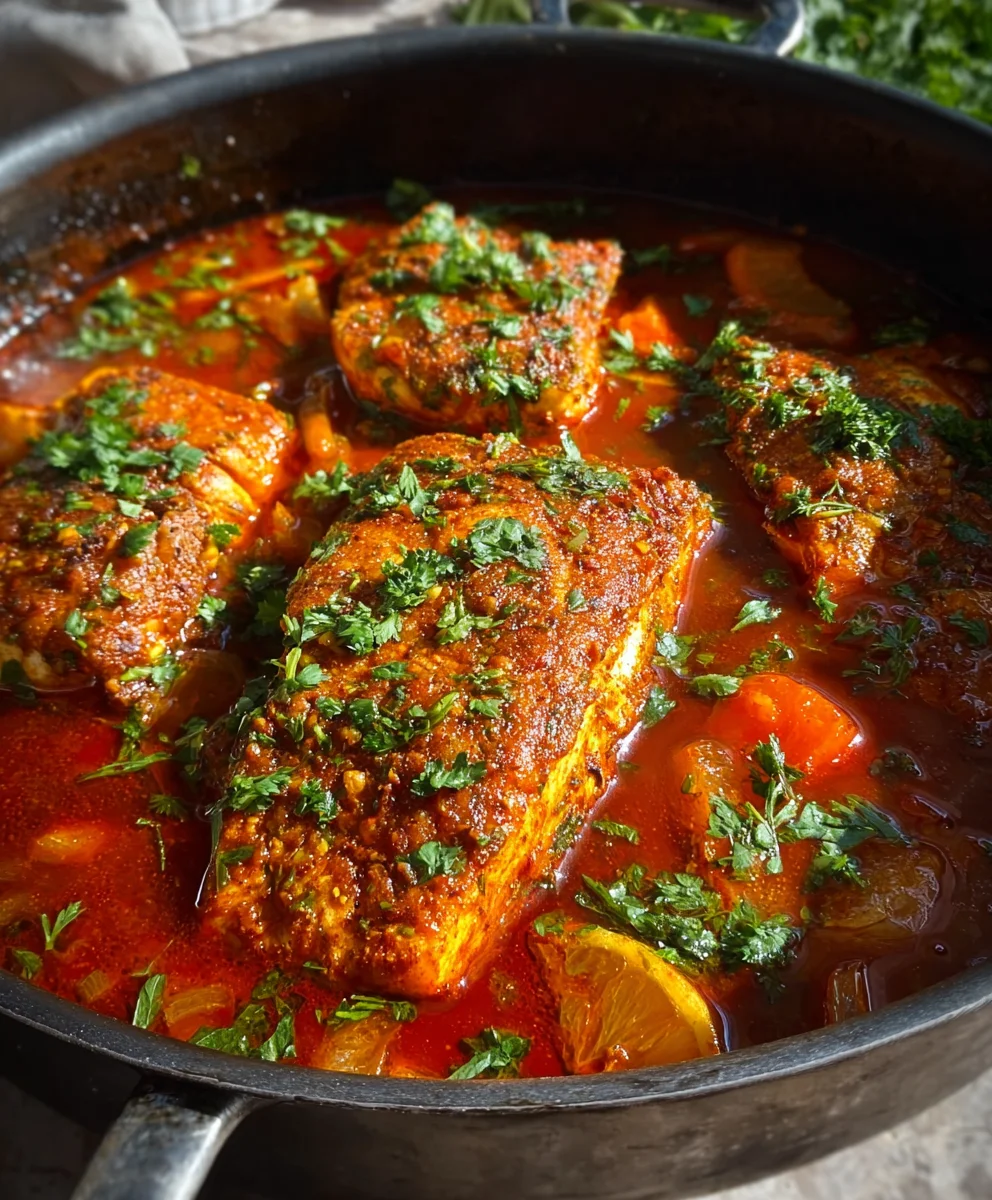
You’ve now mastered the art of creating the Classic Spicy Moroccan Fish in Rich Sauce, a dish that promises to transport your taste buds straight to the heart of Morocco. This recipe, with its vibrant spices and tender fish bathed in a luscious, aromatic sauce, is more than just a meal; it’s an experience. We’ve walked through each step together, from selecting the freshest fish to building the complex layers of flavor that define this Moroccan masterpiece. Remember, the beauty of this dish lies in its adaptability. Feel free to experiment with different types of firm white fish, adjust the chili levels to your preference, or add a medley of your favorite vegetables for an even heartier meal.
Serve your Classic Spicy Moroccan Fish in Rich Sauce piping hot, perhaps alongside fluffy couscous to soak up every last drop of that incredible sauce, or with crusty bread for dipping. A simple green salad or some steamed vegetables make perfect accompaniments. Don’t be afraid to make this recipe your own – that’s where the true joy of cooking comes in! We encourage you to dive in, embrace the spices, and share this delightful creation with loved ones.
Frequently Asked Questions:
Can I make this recipe ahead of time?
While the flavors are best when the fish is cooked fresh, you can prepare the sauce base a day in advance. Reheat the sauce gently and then add the fish, cooking until it’s just done. This will save you some prep time on the day of serving.
What if I don’t have a specific spice?
Moroccan cuisine is all about a blend of spices! If you’re missing a specific spice, you can often substitute it with a similar one or adjust the proportions of the others. For example, if you don’t have cumin, you could slightly increase the coriander. The key is to maintain a balanced, aromatic profile.
Is this dish very spicy?
The spice level can be adjusted! The recipe calls for chili peppers, but you can control the heat by using fewer chilies, removing the seeds and membranes (where most of the heat resides), or opting for milder varieties. You can always add more spice at the end if you prefer it hotter.
Spicy Moroccan Fish Recipe – Rich Sauce Delight
A flavorful Moroccan-inspired fish dish featuring tender salmon fillets simmered in a rich, spicy sauce with aromatic vegetables.
Ingredients
-
1 pound (450g) salmon fillets
-
⅓ cup olive oil
-
1 red bell pepper, seeded and sliced into thin strips
-
1 serrano pepper, seeded and sliced into thin strips
-
½ cup chopped fresh cilantro
-
2 carrots, peeled and cut into ¼-inch thick diagonal strips
-
1 russet potato, peeled and cut into 1-inch thick slices (optional)
-
6 garlic cloves, peeled and halved
-
1 tablespoon tomato paste
-
¾ to 1 cup water
-
1 tablespoon sweet paprika
-
½ tablespoon hot paprika
-
1 teaspoon coarse salt
-
½ teaspoon ground cumin
-
¼ teaspoon ground turmeric
Instructions
-
Step 1
Heat olive oil in a wide, shallow pan or Dutch oven over medium heat. Add sliced red bell pepper, serrano pepper, and halved garlic cloves. Sauté for 5-7 minutes until peppers soften and garlic is fragrant. Add carrot strips and cook for another 3-4 minutes. If using potatoes, add them now. -
Step 2
Sprinkle sweet paprika, hot paprika, cumin, turmeric, and salt over the vegetables. Stir for 30 seconds until fragrant. Add tomato paste and cook for another minute, stirring to concentrate its flavor. -
Step 3
Pour in ¾ cup water and bring to a simmer, scraping up any bits from the bottom. Taste and adjust seasoning. Add more water if the sauce is too thick. -
Step 4
Gently nestle salmon fillets into the simmering sauce, skin-side down if applicable. Cover tightly, reduce heat to low, and poach for 8-12 minutes until fish flakes easily. -
Step 5
During the last 2-3 minutes of cooking, stir in half of the chopped cilantro. -
Step 6
Serve the fish with generous portions of the sauce and vegetables. Garnish with the remaining cilantro. Traditionally served with couscous or crusty bread.
Important Information
Nutrition Facts (Per Serving)
It is important to consider this information as approximate and not to use it as definitive health advice.
Allergy Information
Please check ingredients for potential allergens and consult a health professional if in doubt.